Stacey Yu on “Kitten”, the Tragedy of Growing Up, and the Futility of Blame
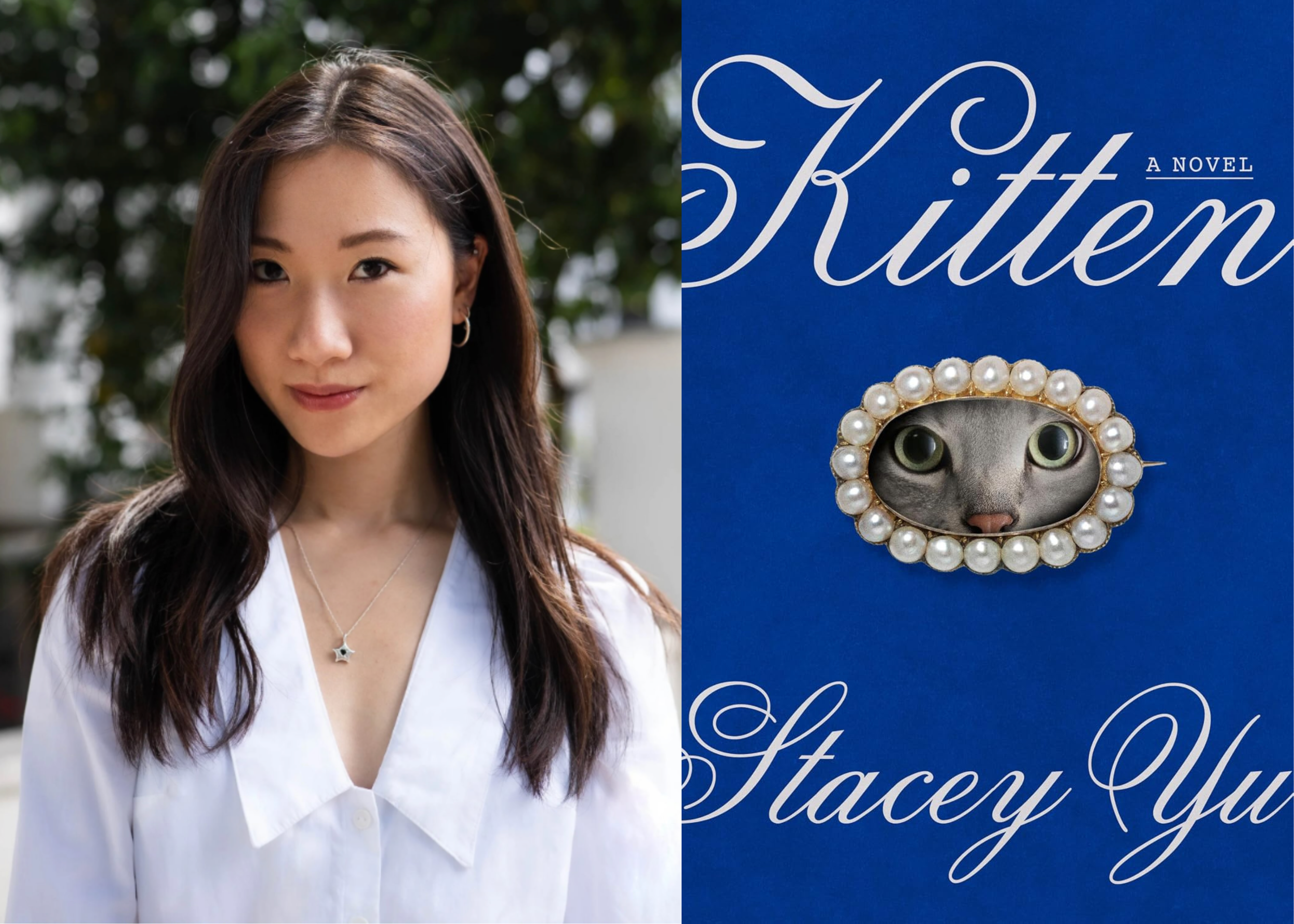
Photograph of Stacey Yu by Anne Yu
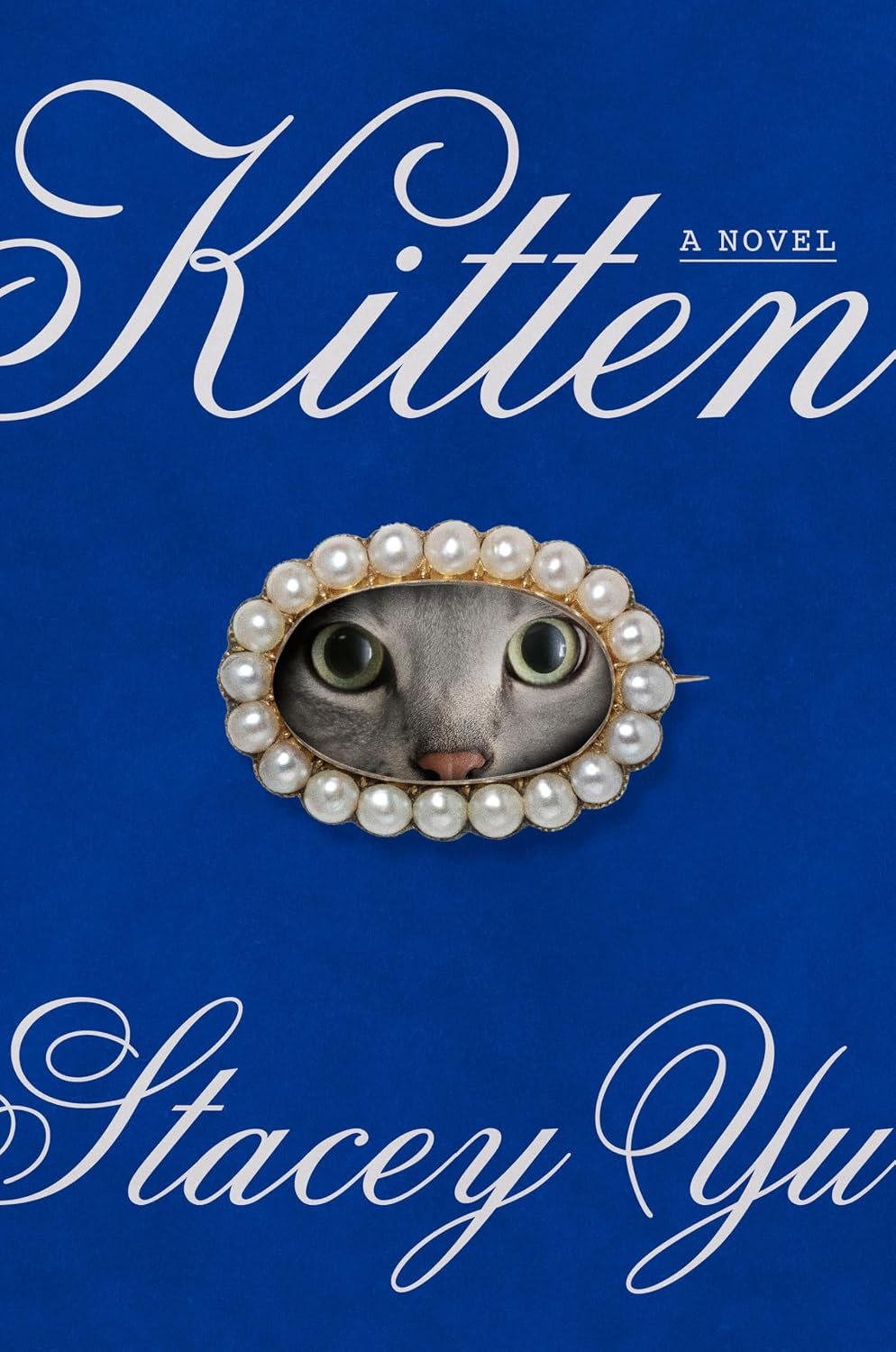
Stacey Yu’s debut novel, Kitten, follows Katie, a newly twenty-two year old living in New York City. Jobless and directionless, she has no idea who she is, what she’s doing, or what she wants. She’s been estranged from her mother for the past year and struggles to see herself as a part of any community in NYC, even hesitating to see her roommate of four years as her friend. As her bank account balance dwindles and her roommate moves out, Katie is frozen in the face of adulthood. Her overwhelming inertia is aided and abetted by her wealthy boyfriend, James, who is more than happy to foot the bill.
In the midst of her turmoil, Katie goes away with James, and James’s childhood cat, Silver, to James’s family’s vacation home in Holme, a well-to-do beach town full of kitschy gift shops and summer people from NYC. While staying in this beachfront mansion, Katie becomes obsessed with Silver, an almost mystical cat who loves swimming in the ocean and eating what she’s not supposed to. After months of post-grad floundering, Katie finds purpose in admiring, caring for, and receiving affection from Silver.,Ultimately, this obsession threatens to upend Katie’s life.
Kitten is equal parts delightful and tragic, as it contends with the grief attached to one’s coming-of-age. Through Katie’s misplaced obsession and crisis of purpose, Yu captures the supreme discomfort of finding and becoming yourself.
Below is my conversation with Stacey Yu. We discussed the process of capturing inaction on the page, writing animals as fully-rounded characters, and more.
Meghan: Can you talk a little bit about the inspiration for Kitten?
Stacey: It’s so hard to access the space I was in when I was writing it. Some writers have a specific idea or an image even that jumps out to them, but, for me, I wanted to write a coming-of-age novel, particularly about what I perceive as the tragedy of growing up and how our narratives of childhood interrupt our experience of adulthood. With the cat, which is the main sticking point that gave the novel its momentum and uniqueness, I wanted to write about something that felt extremely childish, but also wasn’t a child. The idea of an animal jumped at me as a vehicle for exploring childhood and all of its freedoms and safeties. [It’s] also a way of challenging our perceptions of innocence, agency, and control.
Meghan: At the center of this book is, of course, a cat. What made an obsession with a cat such a compelling central relationship for you as a writer?
Stacey: Obsession has always been one of the themes I’m drawn to most in books that I read. Really intense emotions reveal an inner imbalance or an inner desire to escape something. I feel like that’s what obsession really is, a desire to escape. That was an interesting emotion for a novel about a character who wanted to escape the reality of her life, of adulthood, and [who was] confronting the vast possibilities and pressures of life ahead. There were two parts. There was the cat, which would be the vessel through which she would explore all of these things, and then, obsession which would be the specific manner through which she would have to untangle all these emotions. Some of my favorite novels and plays are about obsession, but they’re really about something else. [Kitten] is marketed as a book about obsession, but really, to its core, it’s a book about much softer, passive feelings like loneliness, estrangement, and misbelonging.
Meghan: Twenty-two is such a fraught age of transition. You explore that in-between age through inaction and passivity. Even though the character is not doing something, not doing something is still a choice. Inaction can be hard to capture on the page sometimes, but Katie’s inertia felt really engaging. What was your strategy for making that inaction feel active and purposeful on the page?
Stacey: I’m glad that it was engaging, because that was one of my biggest fears. Passive characters feel very difficult to follow for obvious reasons. To me, a character is still interesting even if they don’t do things, [as long as] they have strong, clear beliefs and systems by which they act or [don’t] act. For Katie, she has a very strong and strict belief system, whether that’s about what she owes her mother or about her place in the world. She doesn’t make any choices, because it’s her way of rebelling against what life wants from her—to be an active person in it. That’s all resulting from her choice to not grow up. Hopefully, the strength of her belief in how much she resisted adulthood would drive the momentum of the book, because you start to see the impossibility of the belief. Also, because she spends so much of the book doing nothing and resisting things, there will be occasions where she just snaps and does a really impulsive, indefensible action. I hoped by dropping those [moments], it would help make the book not completely boring to read.
Meghan: The narrator’s relationship with her mother haunts the whole story, but we don’t actually see them interact in the present day until quite late in the book. Was that something that was built into the book from the first draft, or was that something that was layered in in revision? How did you decide on the moment when they finally spoke?
Stacey: Her mother was always like a specter in the book. I did increase her presence as each revision went by. I teased her character and their relationship out a bit more, but I always wanted the book to be about Katie. It’s not about her and her mother, though her mother plays a big role in who she is. I wanted the mother’s presence to be indicative of her role in Katie’s life. They are estranged at the time the book starts. How do you write about an absence? You have to acknowledge that it’s there. So much of the book is about acknowledging the mother, but then looking away. There’s an outline of the mother that is created through these momentary, brief flashbacks.
I knew I couldn’t have held her at arm’s length forever. The reader does need to know what happens. Part Two starts with the whole chapter on her mother’s life. I hoped that it would be a torrent of information that would clarify things for the reader, clarify things for Katie even, because she is finally allowing herself to think about her mom. If that information came earlier, it would take over the story. I wanted to be careful about timing the backstory. Sometimes, backstory is helpful but can taint the experience of the present. As for when they eventually make contact, the estrangement has to [be resolved], in my opinion. Kitten, for me, is a book about connecting. I hope to give each [relationship in the book] a resolution.
Meghan: The primary setting of this vacation, a beach town full of rich people, is such a dynamic backdrop. Why did that feel necessary as the setting for Katie’s crisis of purpose and her development?
Stacey: It’s a place that she doesn’t know. It’s completely unfamiliar to her. In Holme – this self-contained, well-to-do, distant, and cold beach town – it’s a completely different world and culture from anything she’s experienced. Smaller towns have their own mythology and sense of self that can feel aloof and unwelcoming. It was a way to remove her from any sense of familiarity and put her into this pressure cooker where the anxieties and tensions that she was already battling could be cranked up to an unbearable degree.
Meghan: The way a town like this highlights class discrepancy and race discrepancy is such a good place for her to have to face the fact that she doesn’t know who she is.
Stacey: I loved writing the scenes where she’s meeting people like the Hartleys, [her boyfriend’s] family friends. When you’re in your early twenties, you’re discovering that so many people exist [in ways] that you just don’t know about. When you are twenty-two, you feel so old, but you’re really coming into the world for the first time. In many ways, I believe we never stop discovering new ways that people exist in the world and have money and have taste. When you’re twenty-two, everything feels so new. It can be scary when you’re like Katie and you don’t have a sense of self.
Meghan: I don’t want to spoil too much of the ending, but to speak generally about it: The exploration of fault and guilt and how assigning fault can be a futile endeavor. Is that something you planned to explore from the beginning, or did you discover it along the way?
Stacey: That’s so interesting. This is the first time someone’s brought that up to me about fault and guilt. Everything that I’m writing connects to some degree to my worldview of how to be and how to grow and how to create relationships with people that don’t end the minute that conflict arises. [This is] a lot of what Katie is going through with the estrangement with her mom. Later, she fucks up in a lot of relationships, not only with James, her boyfriend, but with her roommate. The book was always going to be about connection, which implies forgiveness and necessitates a curiosity about people [without] blame and judgment.
James, [her boyfriend], as a character, is so forgiving, almost to a fault. He doesn’t want to hold anyone accountable, really, because he just wants to care for [everybody]. I’m not saying that’s the right way to be. It’s not always the right thing to not blame somebody, but there are ways to hold somebody accountable. What I didn’t want to do was create some morality play where someone was right and someone was wrong, and they suffered. I think everybody has something to learn.
Meghan: We, in our culture, get caught up in the binary of total fault and total innocence and don’t exist in the gray area in between.
Stacey: When [people] encounter a character who makes mistakes or that does something they [don’t] agree with, they want to see them punished. They are punished in the logic of the book, but even if they aren’t, as a reader and as a person, we don’t really have control over how somebody experiences the consequences of their own actions. There’s this perception that people are either good or bad, which can be a little bit limiting.
Meghan: In a lot of books, pets can feel really one-dimensional and little bit more like props in the story, but Silver [the cat] felt like she had so much personality and agency and was a fully rounded character. What was your approach to writing an animal who felt like a character? What advice do you have for writers trying to write animals?
Stacey: I’m really glad you felt that way. Silver is, in my mind, absolutely a character, and I treated her like one. For each character in the book, I gave them something that they wanted and something that they would work towards and something that was preventing them from getting what they wanted. Silver had her own map. I made a map for each character’s journey and core beliefs. Even though [Silver] is a cat, she’s kind of like a mystical cat in the book. She’s there not just to hang around, but she exists in her own right. The way that she exists implicates all the other characters, especially Katie. I always set out with her having a core belief, core desire. [Cats] just insist on their own agency. Silver wants to be free. I wanted all of her actions to ladder up to this core desire. For writers writing about animals, think of them as characters in their own right, with their own desires, whose actions give away their desires.
Meghan: What books, TV shows, movies were touchstones for you while you were writing Kitten?
Stacey: Books-wise, I was really inspired by Elif Batuman’s The Idiot and Either/Or, [with the] voicey-ness of the book and a narrator who knew everything but nothing. I love how that led every observation to be slightly off but gave the book such a marvelous energy. Hot Milk by Deborah Levy was a masterclass in a mother-daughter relationship that was so fraught and tense and full and rich, but really disquieting and unsettling. I wanted the bloodness and the depth of that relationship. [For movies,] Spirited Away. Lots of movies that [understand] the world of the child were really inspiring to me, because so much of the book is about romanticizing childhood. Movies are so good at that, because they can capture a visual world that isn’t necessarily real, especially animated films. Studio Ghibli films really showed the enchantment of how blue a sky looks or how delicious food looks from the eye of a kid. They felt like a part of the book I tried to capture.
Meghan: Now that you say that, [those films] feel so connected to what you’re doing. People often think of inspiration media as things that are within a specific genre or lane, but there are many things that can act as inspiration that are different aesthetically. Sometimes people forget to read a little bit more horizontally.
Stacey: Music as well. Sometimes a song will remind me of a character in [an indirect] way. Even a line of a song can feel like a compass to me. I read this thing recently that Elif Batuman wrote. She was talking about this concept of a God Sentence—either within your book or a lyric or a line from a poem—that captures the book. Finding those sentences can be so helpful when you’re writing. If you’re lost, you can go back to that sentence and ask yourself if what you’re writing is in resonance with that sentence or not. I definitely feel that way about the songs I was listening to, or, with Studio Ghibli, a scene I was imagining. You just find things with the same energy.
This interview has been edited and condensed for clarity.
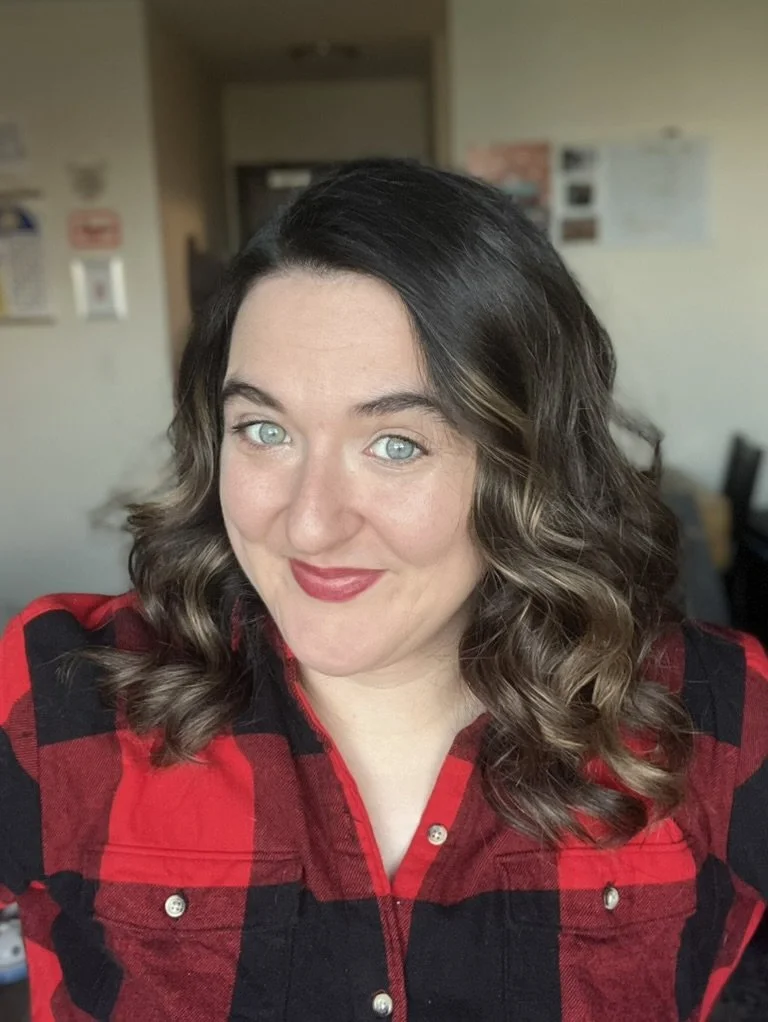
Meghan McGuire
Meghan McGuire (she/her) is a writer and recovering buzzkill. She holds an MFA in Creative Writing from Antioch University – Los Angeles. Her writing has been featured in Porter House Review, Chicago Review of Books, Lunch Ticket Friday Lunch Blog, and the Fan Boy zine. Her television pilots have been recognized by Stowe Story Labs, Slamdance Screenwriting Competition, PAGE International Screenwriting Awards, and Austin Film Festival Script Competition. Born in Alaska and raised in Maine, Meghan followed her passion for cold places to Chicago where she lives with her cat, Pippin. She is working on a memoir. You can find her online at meghanmcg.com or @meghanmcwriter on Instagram.
Read More