Laura Piper Lee on “Doomsdate,” Using Humor to Navigate a Painful World, and Creating Depth in Romance
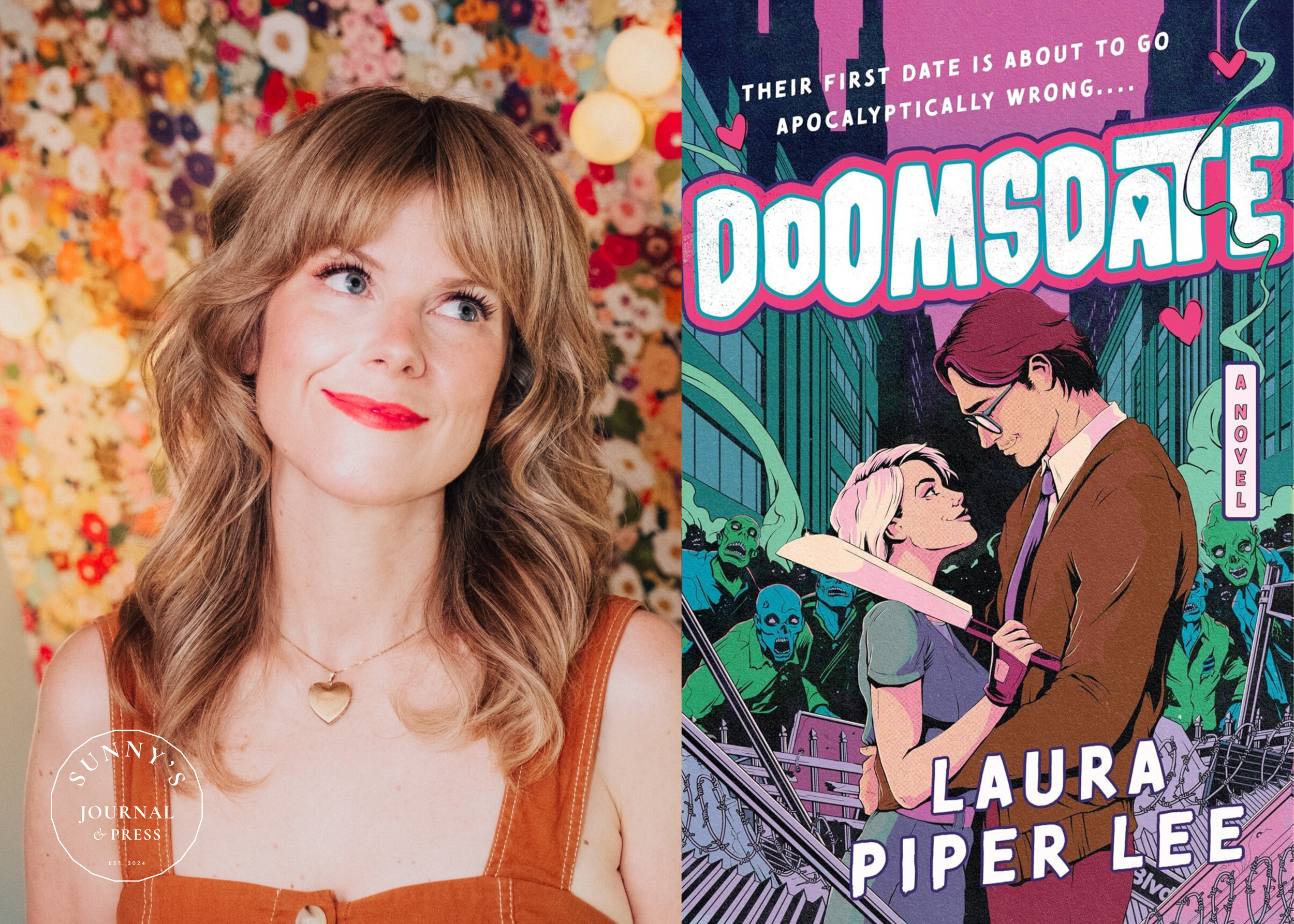
Laura Piper Lee’s rom-com novel, Doomsdate, follows an anxious and socially awkward doomsday prepper Maisie, who is determined to finally lose her virginity as a grown adult. She goes on a first date with a film and TV professor, Everett. Unexpectedly, she finds herself more attracted to him than she anticipated. Meanwhile Everett, a pop culture enthusiast, has fallen into depression after a life-changing event that occurred a few years ago. Feeling joyless and hopeless about all aspects of his life, including romance, Everett fully expects Maisie to reject him. Their date ends up going from bad to worse during their night out when a catastrophic GI-virus spreads rapidly in The United States and starts turning civilians into zombies.
Maisie and Everett must stick together for their survival, deciding to travel north to find safety. During this journey, they’re not only confronting the zombie apocalypse, but also their own inner struggles and the stagnancy of their lives. Although they couldn’t be more opposite of each other, Maisie and Everett quickly find out that they make quite the team when it comes to killing zombies – and maybe for something more, too.
This novel is an easy page turner due to the character arcs, the undeniable chemistry, and the witty dialogue. Although the book is filled with romance, humor, and spicy scenes, it also has its sad and reflective moments. The more serious nature of this book touches on themes of trust, feeling good enough, embracing vulnerability, and giving one’s self permission to live.
Doomsdate is the follow-up novel to Lee’s recently published hit novel, Pot Shot, a stoner romantic comedy about Nomi, a woman with Crohn’s disease who smokes marijuana to cope when all other medication fails. Soon enough, Nomi finds herself face to face with Julian, her former high school rival, who is now an anti-cannabis doctor. Lee is also the author of romances Hannah Tate, Beyond Repair and First Crush.
Below is my conversation with Laura Piper Lee. We talked about writing goofy women, having fun with sex scenes, zombie apocalypses, and more.

Lex: Out of all the doomsday scenarios, what made you decide on a zombie apocalypse?
Laura: When I was a kid, I loved survival fiction like Hatchet and Island of the Blue Dolphins. My favorite books were about people trying to survive, and I feel like that's where my love for the zombie genre came from. A zombie apocalypse is such a huge survival problem. Zombies are everywhere, and most zombie stories are really interesting survival scenarios. Zombies themselves are also fun because they can be not scary at all, or they can be super scary, depending on the director. I like the flexibility of the monster itself. Do you want to make a joke out of it? Do you want to make it serious and frightening? There's a lot of flexibility within this known entity. I've always loved zombie stories, and even though I'm kind of a baby about horror movies, I'll still watch zombie horror movies because they're just fun.
Lex: I also love the spin of romance in a zombie world.
Laura: You've gotta have something to live for, you know?
Lex: I have to ask: Why a diarrhea-induced virus for Doomsdate?
Laura: I have a kid, so I'm exposed to all kinds of kid germs. I had norovirus sometime in the last year, and I remember thinking, It is so contagious. Respiratory illness is what you almost always see with a zombie virus, right? But in reality, everybody I know is absolutely crippled with norovirus. Your child comes home with it, and you just know your days are numbered. You're going to be sick any minute just from being in their proximity. I've often thought the zombie virus doesn't have to be respiratory or blood-based. Norovirus is one of the most contagious, debilitating viruses. It spreads like wildfire. I thought it would be funny to use a different kind of virus. A cold isn't inherently comedic. There's nothing funny about somebody getting a cold and dying from it. Whereas somebody having diarrhea is already kind of like, Wow, that's unfortunate. And then for that to be what turns you into a zombie is just a different entry point into the story. I think it's automatically funnier because of it.
Lex: There’s never a dull moment in this story: a blind first date gone wrong, killing zombies with an erection, and spending the night in the White House. What inspired the story, and did any scaffolding happen when you were writing such a rich plot?
Laura: The story was inspired by an offhand conversation I had many years ago with my partner. At the time, I think we'd just gotten engaged. The Walking Dead had just started, and we were talking about what we'd do if a zombie apocalypse happened. I said, “This is what I would do,” and he said, “I don't want to live without HBO and air conditioning.” I playfully thought, Whoa, whoa, whoa. I've hitched my life to this person who won't survive. I've picked a dud for survival. I remember even thinking they should make that a question on dating apps: What would you do if the zombie apocalypse happened? Are you a survivor, or are you too precious to handle it? I teased him about this for years. Then we had a kid, and finally he's changed his mind. He's like, “All right, fine. I will try to survive for the two of you.” And I'm like, “Oh, thanks.”
Lex: *laughs*

Laura: So I thought it would be really funny to pair somebody who's absolutely going to survive with somebody who's like, I'd rather not. That's where the idea came from. That conversation probably happened fifteen years ago, and it has always been a joke in our relationship. In terms of the plot, it was one of those things where sometimes you have an idea and a vision for a book, and then when you write it, the tone is a little different than you expected. When I first set out to write Doomsdate, I thought, This is a rom-com. This is funny. It's going to be really fun. There is a lot of humor and a lot of funny scenes, but there's also this very tender, sad, nihilistic experience of losing your country and your world and your identity as a person because all the rules are gone. Everyone you knew is gone. It turned out to have more of a bittersweet aspect than I intended. In some ways, it evolved on its own as I wrote it. I think it's a very deeply tender book. It's about grief and trying to live after grief. I intended it to be a romp, and then it turned out to have this very deep heart that came through as I was writing.
Lex: You and your partner's conversation about surviving an apocalypse also seems to have shaped the differences between Maisie and Everett. What led you to make Maisie a Doomsdate prepper and Everett a college professor, specifically a film and media studies professor?
Laura: I wanted it to be realistic that they could survive. I don't think your average person is going to have quite as easy a time surviving a zombie apocalypse as Maisie because she knows how to fight, she understands food preservation, and she has the skills to survive an apocalypse. Everett has zero skills. I needed one of them to be hyper-competent. For Maisie, I talk about this a little bit in the book, but she grows up in isolation with her mom. Her mother has taken her out of society because of an intense, paranoid fear of the world. When her mom dies and Maisie is on her own, she has to re-enter a world that she's been poisoned against. Everything she's ever been taught might not be true because she was raised by somebody who was very mentally ill. She has to go through this huge re-education in order to fit into the world.
When we meet Maisie, it's ten years after she's been in the real world, so she understands a lot more than she would have when she first left the farm. She works as an actuarial analyst, which is somebody who works for insurance companies and helps determine the actual risk of different scenarios. One of the only places she felt welcomed and safe once she re-entered the world was college. A professor could still teach her, and she could sit quietly, listen, and learn. College was her way of entering society. So when she meets Everett, and he's a college professor, there's already a basic level of comfort there. She understands the professor-student dynamic, and she has something she wants to learn. She wants to learn how to have sex, so she's like, Of course this professor could teach me. She has a very clinical outlook about sex in the beginning because she doesn't really expect to like it.
Then, I made Everett a film and TV professor because my partner is one. I wanted the main guy to have the same attachment to television that my partner does, because that was a big part of why he didn't want to survive an apocalypse. I also liked the idea that Everett would be able to bring something to the table through his knowledge of zombie movies, plot structures, and different survival scenarios. He knows the rules of an apocalypse because he's seen them in stories. He doesn't know how to set up a campfire, but he knows story. I also thought it would be funny if somebody who studies something and has made it their whole life met someone who didn't know the first thing about it. It's like, Wow, what do they have in common?
Lex: I'm a big fan of your writing, and one of my favorite things about your voice is how hilarious you are. How do you approach writing humor?
Laura: It's just how I process the world. I think if somebody isn't naturally inclined to make a lot of jokes as a person, they would probably have a hard time writing humor. I would have a hard time not writing humor. Even when I have serious emotions and serious moments in my books, they're always surrounded by humor because I laugh through pain. That's how I process grief, fear, and the world around me, and my characters do the same.
Pot Shot is a stoner comedy, and I love stoner comedy as a genre. I love zombie stories, I love stoner comedies, and I got to write one of each. That's just the best. To me, a stoner comedy is about people who are sweet, gentle idiots.. Alcoholics can be mean, and certain other types of drugs can make people crazy and violent. Pot just makes people goofy. It's temporary idiocy. I've always loved stoner comedies for that reason—gentle, sweet dummies. And I'm like, Women can do that, too. Women can be goofy. I love it for what it is, and I understand what makes it funny to me, I'm able to do it myself.
I also think humor writing is iterative. I'll write a scene and it'll be kind of funny, but then I'll revise it and it gets sharper. I'll revise it again, and the jokes can get better and better with every pass. Sometimes you know a character better when you're on the third draft of a book. You have to be willing to come back to a scene over and over again and sharpen it. But I also think you have to plan the plot to be funny. It can't just be all jokes.
Lex: Do you think the meaningful or deeper parts of a story help sharpen the humor?

Laura: I think they make the whole story more meaningful. I feel like people would have loved Pot Shot even if it didn't have that sad heart to the story. It would still be funny. But because it has that really deep sadness that she experiences with being so sick, something that I think a lot of people who've had chronic illness can relate to, it has more depth. It lets you laugh; it lets you cry, and it lets you feel seen. With Doomsdate, I think romance in particular needs depth. If it doesn't have depth, it doesn't feel believable. If a romance is all fun and games, it doesn't hit the same way when the characters have real stakes in the situation. Everett and Maisie have lost everything. Falling in love is going to look a lot different during an apocalypse for two people who have nobody else. I could have written a really funny zombie book that would probably have played well as a movie, but for a romance, it needed the depth and sadness of those two characters to make it feel like a real romance.
Lex: Trust is a recurring theme in Doomsdate. There's a thread about broken trust on an individual level but also broken trust about the government. Would you care to speak more about that?
Laura: In a lot of ways, both of my 2026 books are in conversation with each other. In Pot Shot, the main character has Crohn's disease. A lot of chronic illness has its roots in the food we eat, preservatives, chemicals we're exposed to, pollution, and all these things in our environment that can lead to systemic inflammation. I feel like the capitalist machine of food isn't worried about the long-term consequences of what these things are doing to our bodies. Other countries have much more rigid controls over their food products than the U.S. does. And that's been really highlighted recently with recall after recall. Everybody knows about the diarrhea lettuce—we couldn't have salad all summer. [In Doomsdate], part of it is that Maisie doesn't know how to trust other people. She wants to learn, but she was fundamentally raised not to trust other people. I knew trust was going to be a major theme for Maisie and Everett as they learned how to come together. Then I wanted to mirror that through the zombie apocalypse: their interpersonal trust is violated by the government on a much larger scale. I feel like the American public are often hung out to dry. Nobody's watching our backs. We're not protected the way we should be from a lot of things, often in favor of corporations. I wanted to explore what that could look like and how it could lead to an apocalypse.
Lex: It's almost strange how timely the book feels, especially with everything happening around food safety and illness.
Laura: I've gotten so many DMs about me predicting the weirdness of a GI virus or a stomach illness occurring with the cyclospora outbreak and everything. And it's like, I didn't know. It's just plausible that something could happen to our food supply.
Lex: I couldn’t agree more. And we can’t forget the romance in the novel! I was swooned the entire time. What do you love about writing romance?
Laura: I really love writing sex scenes. I didn't know that was going to be why. I used to write middle-grade science fiction and fantasy, and I sold my first romance on proposal, which means only the first five chapters were written. So I managed to sell a romance without writing a single intimate scene. I was like, I hope I can do it when I get there. I've never tried it. Then I got there, and I was like, This is really fun. I really enjoy writing this. Sometimes it's the only scene that's easy to write in the whole book. I'm drafting and thinking, Oh, finally. I'm at the sex scene. This part will flow. And it always does.
There's been all this tension you've hopefully been building throughout the book, and then you get to the point where the sparks are happening. You're making the characters collide, and it's really fun to put them in the ring together for the first time and see how it changes their dynamic afterward. I also really love writing good flirting. Flirting is one of life's joys for me. I'm a silly person, and flirting often has a humorous tone to it. So getting to write flirting between characters is very fun. And I like the hopefulness of romance. The happily-ever-after is mentally comforting in a time when we have so much going on and so much bad happening. It's comforting to have something you can depend on and something that's fundamentally hopeful.
Lex: Where do you hope readers will take away from Doomsdate?

Laura: I want them to walk away from it having had fun. I'm so stressed all the time and have so much going on in my life that it can be hard for me to lose myself in a book, TV show, or movie anymore. I really want a book to take me by the horns. I hope that's how readers feel when they read Doomsdate. It hits on so many levels. It's funny, but it's also very serious. There are truly life-and-death stakes. There's this budding relationship trying to form itself amid horrors all around them, which amplifies the stakes even more because you want them to have their happily-ever-after before something terrible happens. I guess I just want to give people a really good time that keeps the pages turning, but also delivers on an emotional level. Maisie and Everett have a very tender, sweet romance. I kept thinking, I'm not going to give them major problems with each other. I'm not going to have a big breakup or anything like that because they've just got enough going on. They don't need that. The book doesn't need that. I love spooky-season reads, so I was hoping to give people a good time that also had substance.
Lex: What are you most proud of about Doomsdate?
Laura: Oh, good question. In some ways, I'm proud that I got to do it because I really wanted to. I love my first two books, but they were pretty normcore compared to Pot Shot and Doomsdate. I felt really strongly about doing a zombie-apocalypse rom-com. I had the idea and thought, This is a great idea. I want to sell this. This is going to be so much fun to write. I'm just glad I was right about that. It went to auction, and there were a lot of publishers who wanted it. That made me feel very validated.And I love the title so much. I don't know that I'll ever name a book that well again. Doomsdate feels like a perfect romance title for what it is. I'm also proud of how sad it gets at times. I was very sad writing some of those scenes, and I like that I delivered on so many different aspects. There's humor, there's heartwarming stuff, there's a lot of action, which was my first time publishing a book with real action. And then there's this super-tender core to it, along with the sad things, because it's a freaking zombie apocalypse. I like that I got away with doing exactly what I wanted.
Lex: I'm glad you were right, because I'm glad this book is in the world. So, what is next for you?
Laura: I’m deeply working on a paranormal rom-com right now. It's a haunted-house rom-com, but not like an actual house. It’s a haunted-house attraction. Then all hell breaks loose. It's been really challenging to write, and I'm currently suffering through that, but I think it's going to be really good when I get it to where I want it to be. It hasn't been announced yet, but I can tell you because no one told me I couldn't: I've sold more books in the Pot Shot world, so I get to write Eve's book next. She's the “mean little lesbian” from Pot Shot, the best one.
Lex: I loved her!
Laura: She's so much fun. She deserves her own happily-ever-after. It's going to be a really fun book to write, too. Right now, I have to get through the paranormal haunted-house book, but then I'll start drafting Eve's book. There will be a little break, though. Eve's book probably won't come out until 2028. That's how it goes. Only one brain.
Lex: Do you think Eve's book will be another stoner comedy?
Laura: Yeah, because she is one, so I don't think it can not be a comedy. I don't think it's going to be quite as centered as Nomi's story because Nomi's whole book is about opening the dispensary. Eve's love story takes place after the dispensary is up and running. There are still problems, but the story won't be as focused on the dispensary business. The dispensary will absolutely still be part of it. And you can't have Eve without pot. She's a huge pothead. It'll be a good time, and I'm going to enjoy writing it.
This interview has been edited and condensed for clarity.
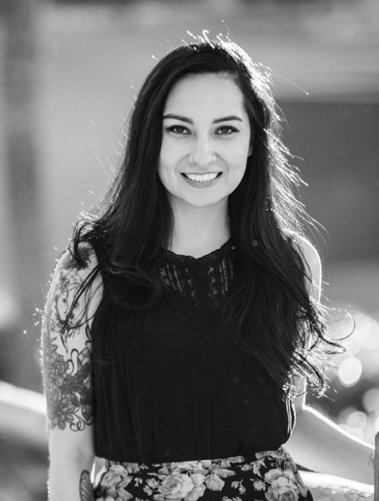
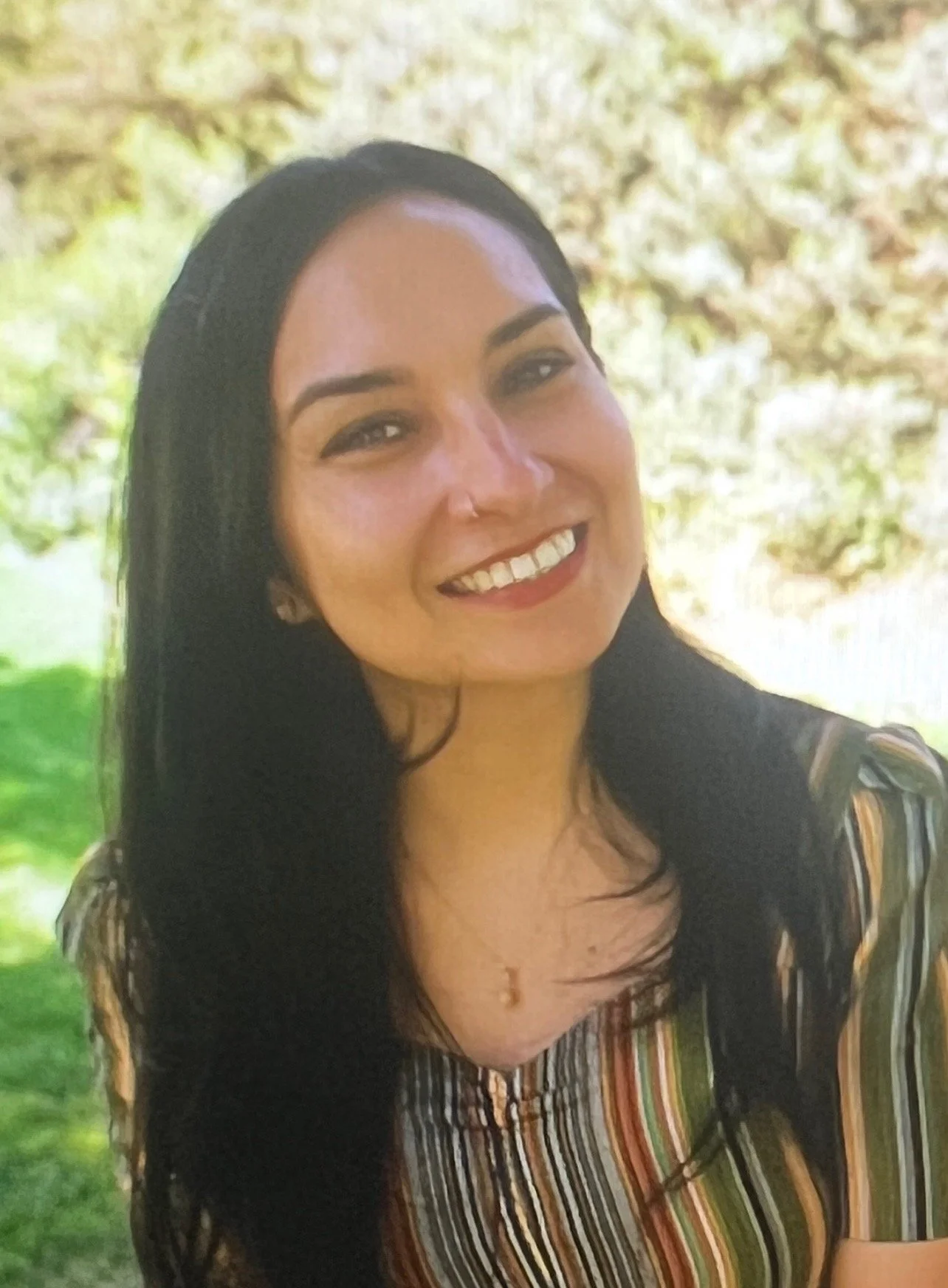
Lex Garcia Nix / Writer
Lex Garcia Nix is a first-generation college graduate and community college alumna, who teaches at the community college level and is a contributing writer for Sunny’s Journal and Press. She earned her MFA from Antioch University, Los Angeles and has further honed her craft at VONA, Tin House, StoryStudio, and The Community of Writers where she was a recipient of The Ancinas Scholarship. She was recently named a 2026 Periplus Fellow. Lex lives in SoCal and is currently working on a coming-of-age novel.
Read More