Grant Ginder on “So Old, So Young”, Writing 11 Drafts, and Exploring the Passage of Time
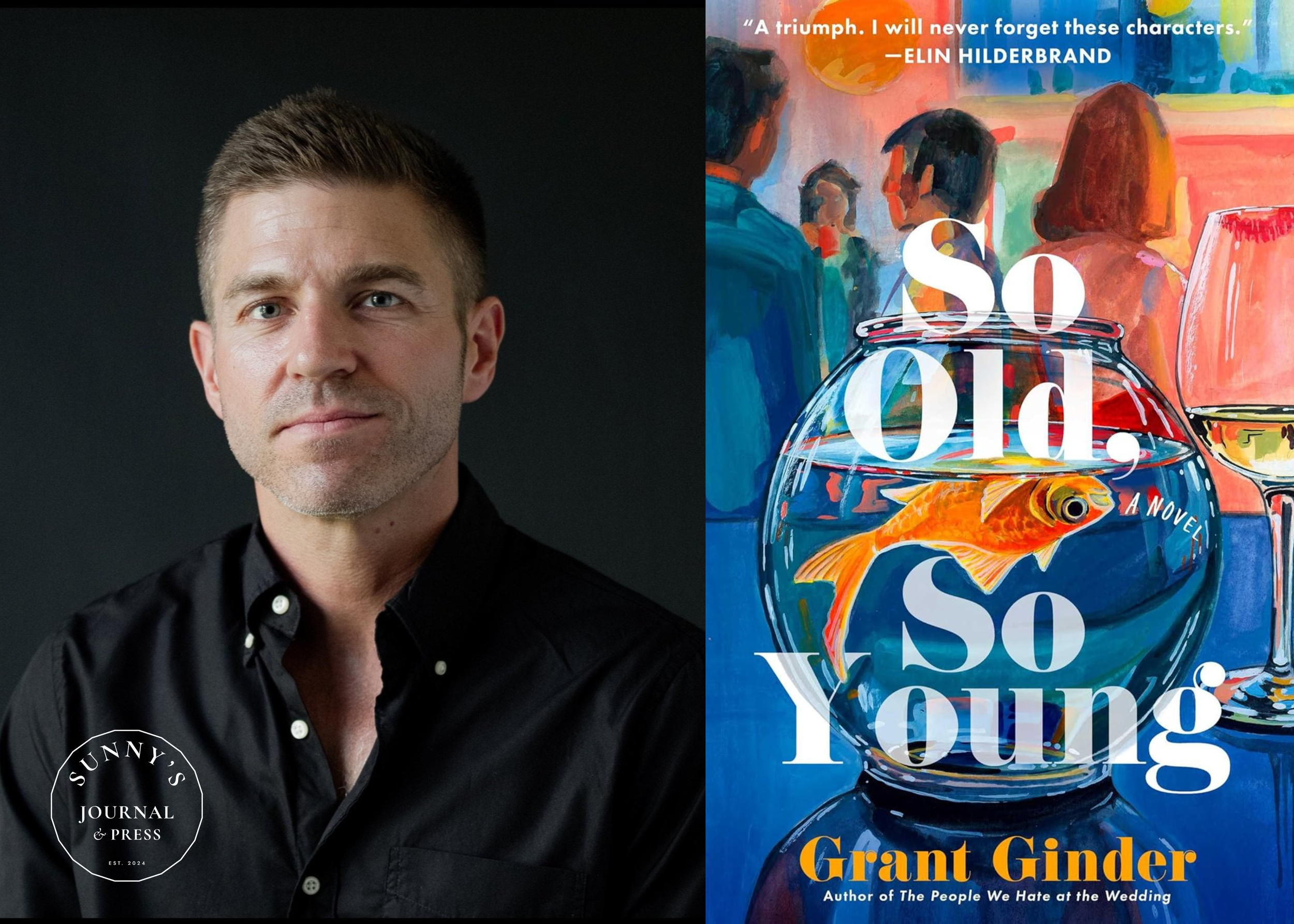
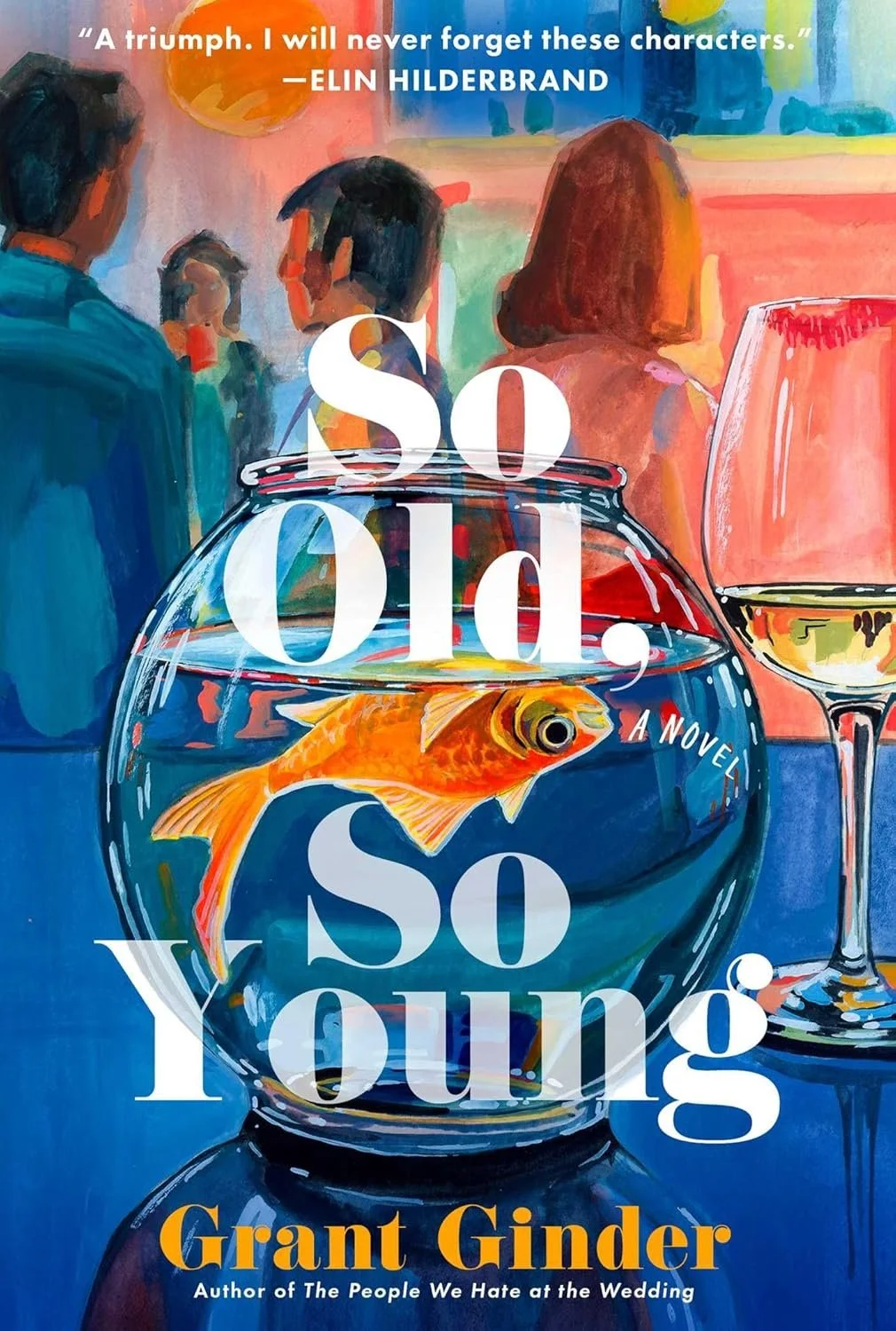
So Old, So Young by Grant Ginder – the author of Let’s Not Do That Again and The People We Hate at the Wedding – follows a group of friends over twenty years as they grow up, grow apart, make mistakes, and face love as well as loss. There’s Mia, a journalist who never quite settles down in the way that her friends do. There’s Sasha, Mia’s best friend who goes through the ups and downs of marriage and motherhood. Then, there's Marco, who was once in love with Mia – and may still be, despite starting a family with someone else. There’s Richie, a man full of charisma and charm, who struggles with addiction. And finally there's Adam, a longtime friend of Mia and Sasha, who, like the rest of them, wants to find love and happiness.
There are five sections of the novel, each one set at a party that the friends are attending. There’s a New Year’s Eve party, a wedding, a 35th birthday party, and a kids’ Halloween party. Finally, the last gathering that the friends attend is a funeral for one of their own.
The characters of So Old, So Young are so fleshed out and vibrant that they will start to feel like friends of your own – to the point that you will become so attached that you won’t want your time with them to end. These friends are messy and complicated – as are their relationships with one another – that you, as a reader, will be engaged from start to finish. Ginder fully succeeds at bringing you into their world, thanks to his sharp humor, smart dialogue, and overall care and thoughtfulness.
Below is my conversation with Grant Ginder, in which we talk about exploring the passage of time through writing, the parties that define certain aspects of one’s life, and more.
Nikki: What was the inspiration for So Old, So Young?
Grant: This is gonna make me sound like a total psycho, but I’m 43 now and around the time I was,like, 38, 39 – you know, approaching 40 – I started having this experience where I would wake up in the middle of the night and literally not know where I was. And that sounds like I’m actually psychotic, but my husband would be sleeping next to me, I’d recognize my apartment, but it would suddenly feel like I had woken up in someone else’s body and I was playing an adult. [It was like] I couldn’t make sense of the fact that I was no longer 22 and now had a 401k and a marriage and a mortgage and everything that comes along with being old. It was a terrifying feeling – and that feeling of being so confused about where time had gone, it inspired me to kind of investigate and think about time. And, particularly, [I wanted to] investigate and think about the ways in which time presses down on our relationships and also naturally changes our relationships. Also, the ways in which we, throughout our days, without realizing it, make all of these tiny decisions that after a number of years accumulate into a life and when we look back at those decisions, we don’t remember having made them. We can’t imagine how one decision led to the next, which led to the next, which led us to a point where, like me, I’m waking up in the middle of the night staring at the ceiling and not understanding how I got there. So all of that anguish and curiosity led me to write the book.
Nikki: That’s so interesting, I feel like all of that really comes through in the ways that the characters behave and think. Also, I love the structure of the novel, setting it at five parties over the course of many years. How did you decide on this structure? And how did you decide on what kinds of parties to go with?
Grant: So, the parties came to me because, you know, parties have a kind of mythic role in friend groups, or at least in my friend group. When I talk to my friends from college, we’re always like, ‘Oh my god, remember how so and so got too drunk at this party, remember what happened at this reunion.’ I wanted to play with that, the fact that these set pieces often hold these outsized roles in friend groups. It also comes to us in bursts of, like, I'm suddenly 40 years old or I’m suddenly getting married, how did this happen? So, I think that I wanted to find a structure that in some ways replicated those bursts of time passing and the party structure worked well for that. And to get to the second part of your question of how I choose the parties, I’m one of those people who can never see the obvious answer right in front of my face, which is that at different stages of our life, we engage in different parties – like weddings, 35th birthday parties, kids’ parties. But at first, the parties were very random, and it was like, you know, someone’s random engagement party. I ended up writing, I think eleven drafts, of the novel and it was like around the sixth or seventh draft where I was like, oh, I should just be doing the obvious thing, which is that these parties should track onto where we are in our lives. So that ended up being the New Year’s Eve party, the wedding, the birthday party, the kids’ party, and then the funeral.
Nikki: Relatedly, at all of these parties, there are some flashbacks throughout the parties to show the reader some of what we’ve missed. Was it difficult to pick and choose which flashbacks to show? It seems hard to be so choosy about which moments to let the reader in on.
Grant: You’re asking all of the really, really good craft questions that get to why I wrote fucking eleven drafts of this novel. So, the tricky thing about the structure is that, exactly what you pointed out, there are huge gaps that the reader has to contend with. I think my inclination at the beginning was to fill in those gaps with way too much backstory. But the problem with that, as you can probably imagine, is that so much of the narrative tension of the book comes from not knowing [what happened]. We’re beginning each section, essentially, in media res, you’re dropped right in the middle. So it was a lot of – and this sounds manipulative but – deliberate withholding. And [I had to decide] what was the important scene in the past that would do the most work for catching the reader up to a point where they can register the weight of a given emotional beat that is happening in the present. It was really picking and choosing. And it was more taking away than adding, I think.
Nikki: That’s such a fascinating process.
Grant: Yeah, and it was the first time I had ever engaged in a process like that, which, again, really speaks to why there were eleven drafts. It was really difficult but really rewarding as a writer, ultimately, to learn how to exercise that kind of restraint.
Nikki: I also loved that the perspective switched around between the core group of characters – did you always know that you wanted to show multiple perspectives? And what was the overall process like of stepping into the shoes of multiple people?
Grant: I went back and forth about who was gonna get a voice, who wasn’t going to get a voice. There was one point in which I was playing around with the idea of it just being narrated by Mia, or just Mia and Marco. But that ultimately didn’t work because it’s not a love story – or, if anything, it’s a love story between friends and I didn’t want to allow their love story to kind of take over. So eventually, after it all shook out, I landed on the stories that interested me the most and that determined which characters’ perspectives we saw on the page. When you’re writing a book like this, with all these points of views, all of them are a little bit like you [as the writer]. So, you tap into a part of yourself that you both love and hate. And you try to, in the least judgemental way possible, allow that part of you to grow into the character that you’re writing. Then eventually, as you get to know the characters more, they take on a life of their own and they start making decisions that feel more natural to them and aren’t just proxies for decisions that you would make.
Nikki: It’s interesting to hear you say that you considered having it from just Mia’s perspective because, to me, she really felt like the heart of the story. So I was actually going to ask if you felt the same way about her?
Grant: Well, it’s a good question because I do feel that, to a certain extent, she does drive the narrative. She’s our entry point into the group of friends. I think also she is the character who has the most of myself in her – I think her insecurities, her crippling imposter syndrome, her bewilderment at time passing. Those are all track with my own neuroses. So, it just felt the most natural for me to have her appear the most – she starts every section, she starts the book, she ends the book. I think that’s because she became my proxy in a way.
Nikki: That makes a lot of sense. And also, I just want to tell you that I was really rooting for Mia and Marco, which I found so fascinating because we get so little of them actually together.
Grant: That makes me so happy! And here’s a really funny story. Around the sixth or seventh draft, I had lunch with my editor and he was like, ‘Alright, so what you have to do is make the readers fall in love with Mia and Marco in the first section, then break them up and, you know, you’ve got like x numbers of pages to do it.’ And once I turned in the final draft and he liked it, he was like ‘I really didn’t think you were gonna be able to pull that off.’ And my previous books don’t really have a strong romantic component to them, so I really didn’t know what I was doing, so I didn't think I was gonna be able to pull it off either. I was like, how do I get these people to literally meet, fall in love, and kiss in a period of like what accumulates to like 20 pages? And so that makes me really, really happy to hear that you were rooting for them. I’m rooting for them!
Nikki: You really did pull it off. And similarly, I was also really rooting for Richie and Adam, even though the only time we see them as a couple is before Richie gets his act together. Afterwards, I was like, okay be together now! But of course, that plays out differently. It’s just a testament to how much I cared about these characters.
Grant: Thank you, that means so much to me. Yeah, with Richie and Adam, in particular, I wanted to play with timing. There’s obviously an addiction component with Richie and people very close to me have struggled with addiction. I wanted to explore [addiction] and show grace to that. But there’s also this component of, like, so much of falling in love is timing and so much of love lasting is just about timing and where you are in your life. And how tragic it is, when two people could have met at another point in life when they could have been together, if they had just met later. And particularly with Adam and Richie, I wanted to explore that.
Nikki: And it was so compelling! I also want to talk about Nina because I was so surprised when she got her own chapter. I think, at the beginning of the novel, it’s so easy to judge her or categorize her as the “annoying” friend but I came to emphasize with her so much during her chapter – and I even wanted more from her. What was the thinking behind giving her a chapter and also keeping it at just the one?
Grant: Yeah, that surprised me too! Maybe it’s just me, but I’d like to think that we’ve all had moments when we’re in social settings and become incredibly anxious and we’re like aware of what we’re saying and we’re aware of everyone being like, ‘okay, why is he talking.’ And so that idea of feeling profoundly lonely when you’re surrounded by other people, I wanted to explore that. And, if there was space, I wish I had given everyone a space in the novel, like Mitch or Theo because I think that they’re not two dimensional people. And that was really the case with Nina. I wanted to explore what it was like, that awful feeling we’ve all had of being profoundly lonely in a social situation and not understanding why we can't connect. So that desire to explore that feeling kind of gave rise to Nina.
Nikki: I’m just really happy that her chapter is in there.
G: Thank you! It is actually my favorite chapter in the book.
Nikki: So, the friends come together, in the final section, in the aftermath of a tragedy. Did you always know that you wanted the last occasion to be more of a somber one?
Grant: I did know I wanted it to be linked to some kind of loss because [it fits what] we were talking about earlier of gatherings that tack on to certain phases of life. Because you reach a certain point in life where you do have to start dealing with profound loss. And I wanted to show how these characters would react to that.
Nikki: One of your other books, The People We Hate at the Wedding, was adapted into a film. If So Old, So Young was adapted, are there any actors you have in mind who would fit your characters?
Grant: Oh my gosh, that is a really, really great question. It’s tough casting because they have to be able to play young and then they have to be able to play to about age 40. I should have an instant answer to this but I don’t. You know, the actress, Ayo Edebiri, was actually a student of mine at NYU and she was fantastic, as you can probably imagine, and also a really wonderful writer. I think that she could – and just knowing what I know – I think she could be an incredible Mia. I think she could bring a sense of pathos and neuroses to it that could be really incredible.
Nikki: That’s such a great pick! While reading, I was thinking of Elizabeth Olsen for Mia.
Grant: Oh, fantastic! It’s funny, the characters, when I’m writing them, they just take on such a specific feel in my mind that it’s really difficult for me to attach a living person to them. It’s difficult because in my mind they’re a very specific thing.
Nikki: That makes a lot of sense. And you know, I really became so attached to these characters and I just didn’t want my time with them to end. Did you find it difficult to stop writing about them? And how did you know the right place to stop?
Grant: A funeral is a good end point, but I also like to imagine this will just keep going. I imagine that these lives will continue to intercross, like, 40 years on. Five [sections] felt like a good number too because, I don’t know, I’m a sucker for structure and five works well for dramatic structure. And you know, my editor really doesn’t like anything over a certain word limit, so throwing another one in was gonna be hard, which helped persuade me to land on five. But in my mind, it was actually always five and that’s because of this adherence I have to the classic dramatic structure of five acts and this story really felt like five acts.
This interview has been edited and condensed for clarity.

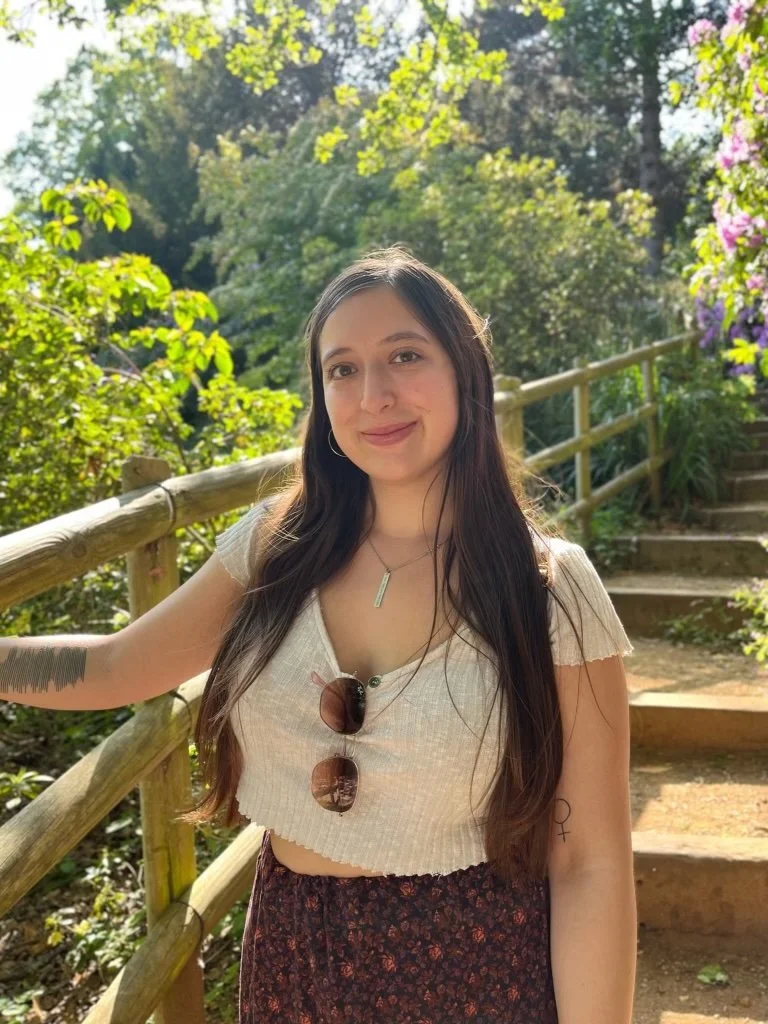
Nikki Munoz / Editor
Nikki Munoz is a writer living in Los Angeles. She has written for the LA Times, Looper, Stage Raw, and more. She received her MFA in Creative Writing from Antioch University in Los Angeles and is currently working on a novel.
Find her on Instagram @nikkimunozwrites
Read More